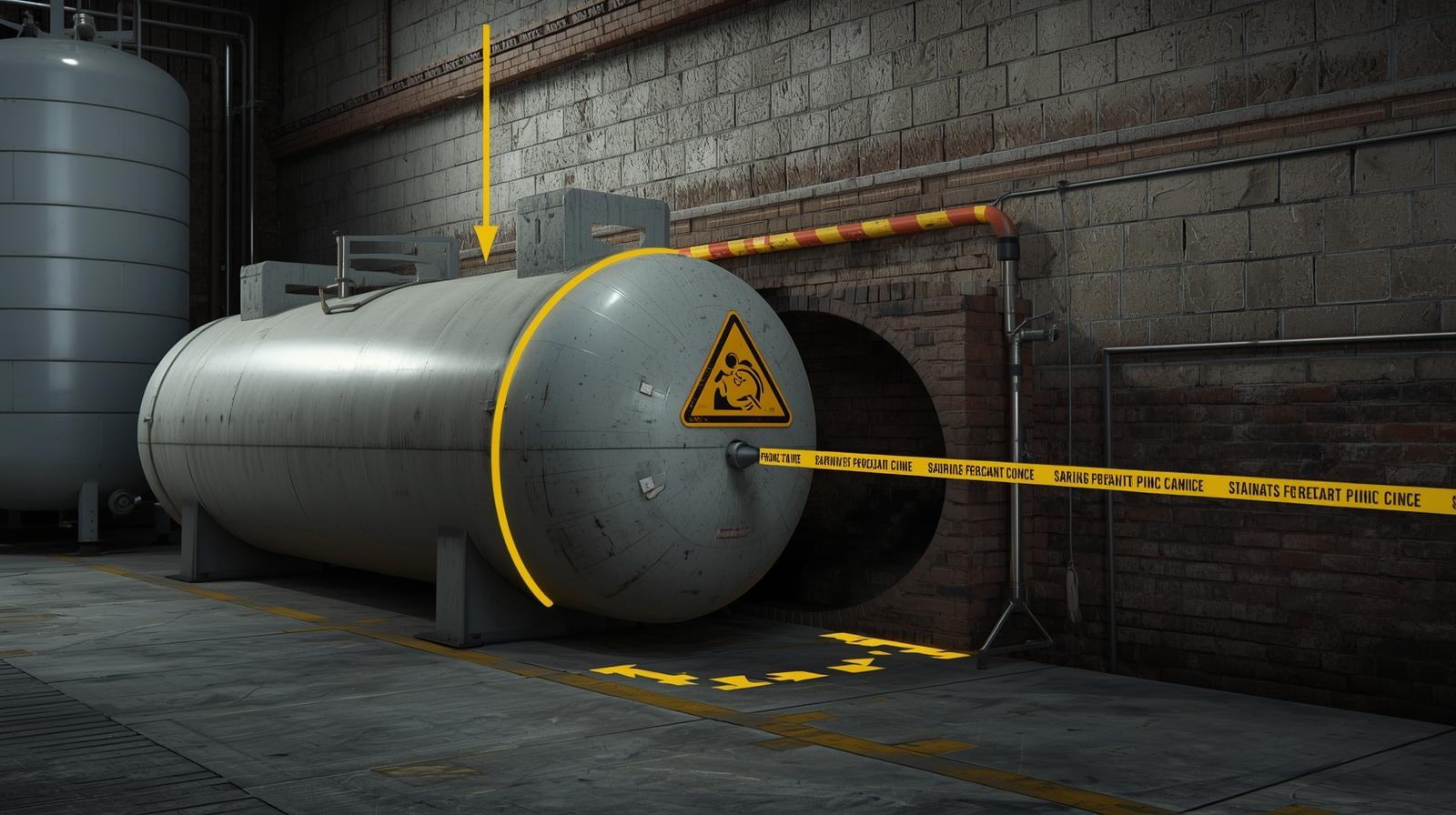
Fatal Propane Tank Incident — Lessons on Workplace Layout and Due Diligence
Case Study · Propane Hazard / Equipment Layout
A worker was fatally pinned between a 1,000-gallon propane tank and the brick wall of a building during routine work. This case shows why supervisors and employers must verify clearances, layout, and hazard controls—before anyone starts work.
🟦 WHAT HAPPENED IN THIS CASE?
A worker was carrying out routine work beside a large 1,000-gallon steel propane tank. The tank was positioned close to the brick wall of a building, creating a narrow and unforgiving pinch point. During the task, the worker became trapped and was fatally crushed between the tank and the wall.
Key Facts (Case Box)
The worker sustained fatal injuries.
A 1,000-gallon steel propane tank was installed close to a brick wall.
The clearance between the tank and the structure created a crush/pinch hazard.
A worker entered the gap and became pinned between the tank and the wall.
🟧 WHAT DID THE COURT SAY?
Legal Duty Under OHSA (Duty Box)
The court focused on the employer’s duty under the Occupational Health and Safety Act (OHSA) to:
“Take every precaution reasonable in the circumstances for the protection of a worker.”
Basically, what this means is that if a hazard is visible, predictable, and preventable, the employer must control it before someone is hurt. Layout hazards—like tight clearances, unguarded equipment, or pinch points—are considered foreseeable.
The court found that:
- The employer did not ensure safe clearances around the propane tank.
- The hazard was permanent and well-known, yet no guard, barrier, or safe work procedure was in place.
- Workers were exposed to a preventable crush hazard every time they worked beside the tank.
In the court’s view, this failure fell short of what due diligence requires.
🟦 PRACTICAL ACTIONS FOR SUPERVISORS
(Checklist block)
Supervisors are the front line of hazard identification. Here’s what the court expects you to do:
Keep asking: “If something goes wrong, where does the worker end up?”
- Walk the work area and look for crush, pinch, and struck-by hazards—especially around tanks, equipment, and fixed structures.
- Verify that workers understand the safe procedure before starting the task.
- Stop work if you observe a layout hazard and correct it immediately.
- Document inspections and assign follow-up actions to ensure changes are made.
🟩 PRACTICAL ACTIONS FOR EMPLOYERS
(Checklist block)
Employers must build the system that supervisors enforce. That system must include:
- A formal risk assessment for propane systems, including tank placement and clearances.
- Engineering controls such as barriers, bollards, guard rails, or minimum clearance distances.
- Safe work procedures that match real conditions on site—not outdated paperwork.
- Training that explains the specific crush hazards around equipment and tanks.
- Regular audits to verify that procedures, inspections, and controls are actually working.
- Immediate corrective actions when new hazards are identified.
Employers must demonstrate due diligence, meaning documented, proactive efforts—not assumptions that “we’ve never had a problem here before.
🟦 HOW TO USE THIS CASE IN YOUR WORKPLACE
This case is a valuable safety conversation starter. You can use it during:
- Supervisor meetings
- Toolbox talks
- Field inspections
- Joint Health & Safety Committee meetings
Encourage your team to walk their own site after reviewing this case. Ask:
- “Could this happen here?”
- “Where do we have tight clearances or pinch points?”
- “Do workers ever squeeze through areas that should be blocked off?”
This case reinforces a simple message: layout is a hazard—and it must be part of your inspection routine.
🟦 CASE SUMMARY (Quick Reference Box)
Hazard Type:
Propane handling • Layout hazard • Equipment pinch point
Root Cause:
Insufficient clearance between the propane tank and the brick wall.
Immediate Cause:
Worker entered the narrow gap and became trapped between the tank and the wall.
System Gaps Identified:
- No engineered clearance standard for propane tank placement
- No guard, barrier, or physical control preventing worker entry
- No safe operating procedure addressing pinch-point hazards around tanks
- Layout hazard accepted as “routine”—not formally assessed
Key Teaching Point:
A layout hazard is foreseeable. If a worker can enter a gap, then an employer must treat it as a hazard and take every precaution reasonable to control it.
[case_study_buttons pdf_url=”https://blog.worksafesounds.com/wp-content/uploads/2025/11/worksafe-propane-layout-case-study.pdf”]