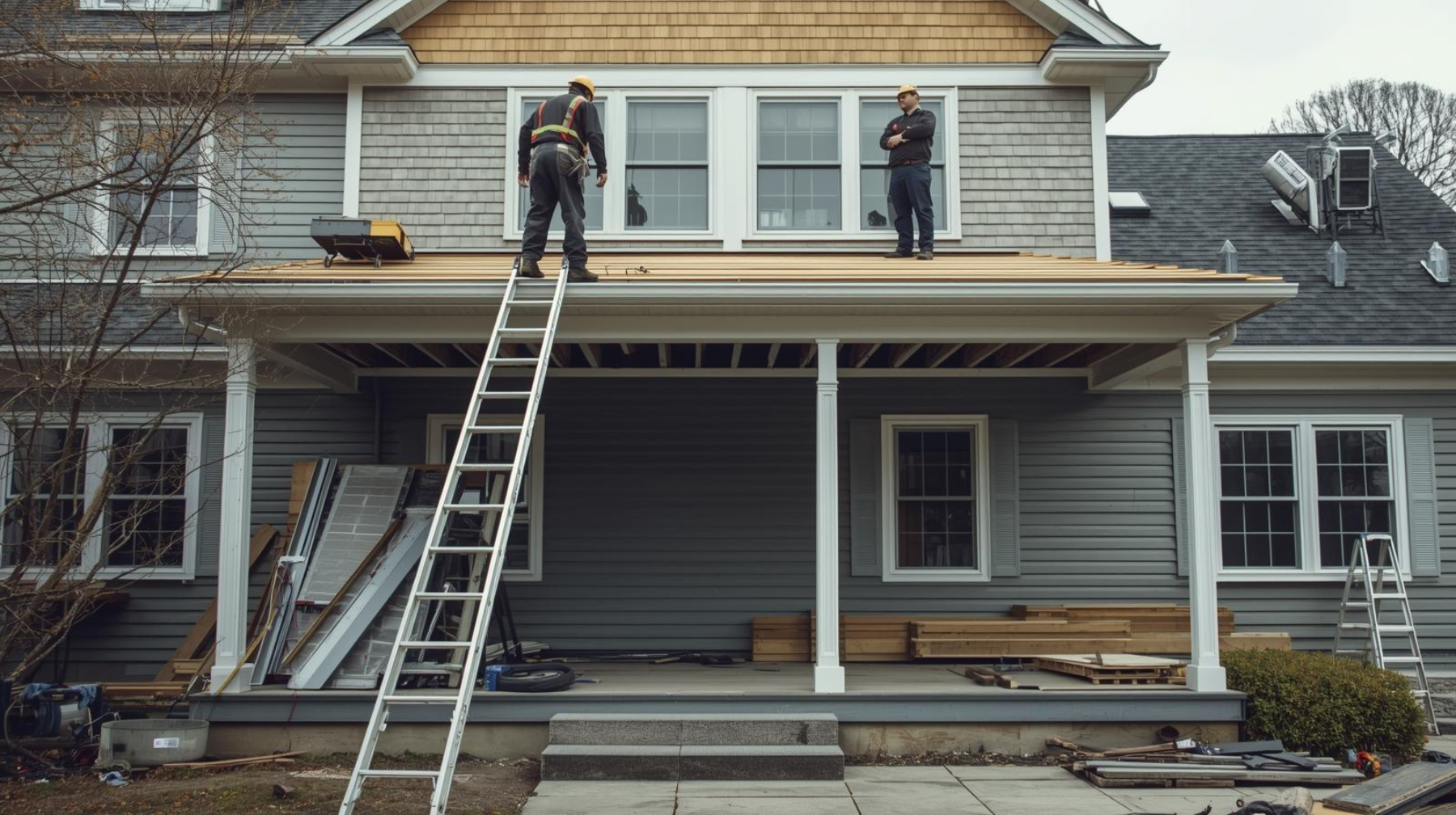
Fatal Fall at KAS Aluminum & Copper Ltd. — Lessons on Fall Protection and Supervisory Responsibility
Case Study · Working at Height Training / Fall Protection / Residential Construction Fall / Ladder Safety
A worker at KAS Aluminum & Copper Ltd. in Ontario was fatally injured on October 11, 2023. A workplace safety violation occurred. The company was convicted and fined $80000, but more importantly, this case highlights a critical lesson: Workers must use fall protection when working at heights over 3 metres.
🟦 WHAT HAPPENED IN THIS CASE?
A worker with KAS Aluminum & Copper Ltd. was helping their supervisor, who was also the company owner, install windows and siding during a home renovation project.
The worker was positioned on a **veranda roof approximately 3.6 metres above ground level**. While attempting to climb a ladder to access the main roof, the worker **fell backwards to the ground below** and suffered fatal injuries.
During the investigation, it was discovered that:
– The worker had **not completed mandatory working-at-heights training**.
– Neither the worker nor the supervisor were using fall protection.
– Proper fall protection equipment **was available in the company truck** on site.
Basically, what this means is that the hazard was known, the equipment was available, but the procedures were not followed.
Key Facts (Case Box)
Company: KAS Aluminum & Copper Ltd.
Location: Ontario
Incident Date: October 11, 2023
Conviction Date: July 11, 2025
Fine: $80000 + 25% victim surcharge
Violation: Failed to comply with section 26.1(2) of Ontario Regulation 213/91 contrary to Section 25(1)(c) of the Occupational Health and Safety Act.
🟧 WHAT DID THE COURT SAY?
Legal Duty Under OHSA (Duty Box)
Under Ontario’s Occupational Health and Safety Act (OHSA), employers must “take every precaution reasonable in the circumstances” to protect workers.
In this case, KAS Aluminum & Copper Ltd. was found to have violated Section 26.1(2) of Ontario Regulation 213/91, which requires:
– Fall protection when workers are exposed to a fall of more than 3 metres.
– Training and competent supervision.
– The enforcement of safe work procedures.
We want employers to understand that the legal requirement is not optional. When workers are on a roof, near an edge, or climbing to transition between surfaces, fall protection must be in use — every single time.
Why This Happened
When we look at cases like this, the pattern is familiar. The contributing factors often include:
- Lack of fall protection use, despite equipment being present
- Inadequate supervision
- Missing or incomplete training
- A normalized culture of “just getting it done”
Here is an example: a supervisor may believe a worker is only climbing for a moment to pass up a tool. But the risk remains the same. A fall from 3.6 metres is enough to cause life-altering injury or death, and in this case, it did.
🟦 PRACTICAL ACTIONS FOR SUPERVISORS
(Checklist block)
Supervisors play a critical role under the OHSA. This case highlights several important takeaways:
Keep asking: “If something goes wrong, where does the worker end up?”
- Ensure workers complete **Working at Heights** training **before** they start elevated work
- Conduct pre-work safety checks and verify fall protection is set up properly
- Stop work immediately if workers are not tied off
- Provide clear instructions and monitor high-risk activities closely
- Never allow “quick tasks” to bypass fall-protection requirements
Basically, supervisors must lead by example. If the supervisor is not wearing fall protection, workers will not see the need to wear it either.
🟩 PRACTICAL ACTIONS FOR EMPLOYERS
(Checklist block)
Employers must set the tone by establishing safe systems and enforcing them:
- Implement a full fall protection program with training, equipment, and written procedures
- Make sure supervisors are trained and understand their legal responsibilities
- Conduct regular inspections and document corrective actions
- Keep fall-protection equipment on site, accessible, and maintained
- Enforce compliance consistently — no exceptions
This approach demonstrates due diligence and strengthens the Internal Responsibility System (IRS).
🟦 HOW TO USE THIS CASE IN YOUR WORKPLACE
This case is a valuable safety conversation starter about work at heights, ladder use, and residential construction.
- Supervisor meetings
- Toolbox talks
- Field inspections and site walks
- Joint Health & Safety Committee meetings
- Orientation for new hires or temporary workers
Encourage your team to review the facts and then walk their own site. Ask:
- “Could this happen here on any of our projects?”
- “Where are workers climbing ladders or moving between roofs without fall protection?”
- “Do we ever treat ‘quick tasks’ as exceptions to our fall-protection rules?”
- “Are we verifying that every worker has valid Working at Heights training before they go up?”
- “Do supervisors always model the right behaviour when they work at heights?”
This case reinforces a simple message: **a fall from heights is foreseeable**—and even short tasks must be planned, controlled, and supervised. Fall protection must be part of your daily inspection and pre-job planning routine.
🟦 CASE SUMMARY (Quick Reference Box)
Hazard Type:
Working at heights • Ladder use • Residential construction fall
Root Cause:
Worker exposed to a fall hazard above 3 metres without fall protection and without required training, while the supervisor failed to ensure that fall protection was used.
Immediate Cause:
Worker fell backwards from a ladder/veranda roof approximately 3.6 metres above ground level and struck the ground below, resulting in fatal injuries.
System Gaps Identified:
- No effective verification that the worker had completed mandatory Working at Heights training
- Fall-protection equipment available on site but not set up or enforced
- Supervisor working at heights without fall protection, modelling unsafe behaviour
- No clear, enforced procedure for accessing higher roofs safely during siding and window installation
- Risk of falls during “short tasks” treated as routine rather than formally assessed and controlled
Key Teaching Point:
A fall hazard above 3 metres is **foreseeable**. When employers and supervisors have equipment and legal requirements in place but do not enforce them, they have not taken every precaution reasonable in the circumstances. Every task at heights—no matter how quick—must be planned, controlled, and supervised using proper fall protection.
[case_study_buttons pdf_url=”https://worksafesounds.com/wp-content/uploads/2025/12/KAS_Fall_Case_Study_Branded.pdf”]